Showing posts with label activism. Show all posts
Showing posts with label activism. Show all posts
Tuesday, September 29, 2020
Fifteen Years of Radical Citizen Media
In September of 2005, I attended my first peace march, and afterwards launched what has become RadicalCitizenMedia.com to document progressive social movements and citizen engagement. 15 years later, it has almost 50,000 photos, 3400 videos with over 4 million views, and 4500 subscribers. And YouTube still won't monetize me, LOL!
https://www.radicalcitizenmedia.com

Monday, December 02, 2019
Our Digital Future, C'est Ici

The questions and comments that followed were excellent. Here is a summary of the outcomes of those questions and comments:
Friday, March 22, 2019
A School Visit for the International Day for the Elimination of Racial Discrimination
On March 21, I was invited for the second time as a guest speaker for the International Day for the Elimination of Racial Discrimination on March 21 at Balwin School in north Edmonton. My talk was very similar to the one I gave last year, focussing on anti-bullying, anti-Semitism, and activism.
This year, I added am emphasis on calling out and stopping racist and prejudicial comments immediately, to prevent them from becoming normalized and becoming the start of a path of hatred. We've seen what unchecked hatred can do with the recent terrorist attack at the mosque in Christchurch, New Zealand, and at the Tree of Life Synagogue in Pittsburgh last year.
Some of the young people in the multiracial class shared their experiences encountering racism, but also asked me a lot of questions about being Jewish, mostly about cultural and religious practices. I was apparently the first person most of them had ever met who self-identified as being Jewish. Even their teacher and the student teacher were asking me questions.
Opportunities like this are really important because these young people now could put a face and name to the word "Jewish." Much racism and prejudice often comes from fear of the "other." Now, a Jewish person is no longer an "other" to them. When we get to meet people from different backgrounds, and we sincerely seek to learn about their lives and traditions, it helps to build intercultural understanding, peace, and harmony in our society.
Monday, October 29, 2018
A Safe Space for Activism: Talk and Music
I was invited to be the guest speaker and performer at the Unitarian Church of Edmonton for its quarterly "Social Justice Sunday" on October 28, 2018. The topic was "A Safe Space for Activism." Below is a video of my talk and performance of four songs, as well as my notes. I ad libbed a bit in my talk as well, because I was responding to the previous speaker and adding a few things here and there as well.
Safe Spaces and Self-Care I come from a Jewish background. In Judaism, as some of you probably already know, there is a concept called tikkun olam, which translates to healing or repairing the world. Much of my activism is rooted in this belief. There is a lot of talk about safe spaces in the activist community and beyond, especially now in light of the #MeToo movement. When it comes to establishing and maintaining my safe spaces, of course, the support of my family, friends, and community is important. Being able to confide, ask for advice, share experiences, and the opportunity to be accountable and hold others to account is part of having a healthy community. But like every part of society, the activist community is not immune from bullies and predators, which is why having a network of support is so important. Having safe spaces also includes finding a place and time for self-care. Activists often get so wrapped up in organizing and attending events, that they neglect their own needs, leading to burnout and mental and/or physical health issues. Not being at the best we can be physically and mentally can make us more vulnerable. We need to be safe to say no when we are stretched, and to have the space to explore our own self-care needs. Music is an integral part of my safe space and my self-care. Like my faith, music also was a formative part of my activism. Through my mother, I grew up listening to a steady stream of Joan Baez, Bob Dylan, Buffy Sainte-Marie, and Peter, Paul and Marie. The folk music of the 60s helped shape my political beliefs and my own musical style, when I began learning how to play the guitar and write songs as a teenager. Music is part of my activism, writing songs about social justice issues and performing at rallies and protests (and events like this). For me, music is both a creative expression and a place of mental retreat. Putting on my headphones helps take me away from the stress of daily life, can calm anxiety, and sometimes even help me concentrate. Writing and performing music, whether in front of an audience or in the privacy of my home, also cuts through stress and helps me focus. I find that if I go more than a few days without playing music, I get very tense and feel incomplete. Then, as soon as I pick up a guitar and start singing, my sense of grounding and balance is restored. There are proven health benefits of singing, both physically and mentally (these can be researched online), and I can attest to many of them from first hand experience. Besides being a part of my safe space, music helps me reach out to audiences with messages of peace and love and social justice. I will be sharing some of these songs with you today, and I welcome you to join me in my place of sanctuary.
Safe Spaces and Self-Care I come from a Jewish background. In Judaism, as some of you probably already know, there is a concept called tikkun olam, which translates to healing or repairing the world. Much of my activism is rooted in this belief. There is a lot of talk about safe spaces in the activist community and beyond, especially now in light of the #MeToo movement. When it comes to establishing and maintaining my safe spaces, of course, the support of my family, friends, and community is important. Being able to confide, ask for advice, share experiences, and the opportunity to be accountable and hold others to account is part of having a healthy community. But like every part of society, the activist community is not immune from bullies and predators, which is why having a network of support is so important. Having safe spaces also includes finding a place and time for self-care. Activists often get so wrapped up in organizing and attending events, that they neglect their own needs, leading to burnout and mental and/or physical health issues. Not being at the best we can be physically and mentally can make us more vulnerable. We need to be safe to say no when we are stretched, and to have the space to explore our own self-care needs. Music is an integral part of my safe space and my self-care. Like my faith, music also was a formative part of my activism. Through my mother, I grew up listening to a steady stream of Joan Baez, Bob Dylan, Buffy Sainte-Marie, and Peter, Paul and Marie. The folk music of the 60s helped shape my political beliefs and my own musical style, when I began learning how to play the guitar and write songs as a teenager. Music is part of my activism, writing songs about social justice issues and performing at rallies and protests (and events like this). For me, music is both a creative expression and a place of mental retreat. Putting on my headphones helps take me away from the stress of daily life, can calm anxiety, and sometimes even help me concentrate. Writing and performing music, whether in front of an audience or in the privacy of my home, also cuts through stress and helps me focus. I find that if I go more than a few days without playing music, I get very tense and feel incomplete. Then, as soon as I pick up a guitar and start singing, my sense of grounding and balance is restored. There are proven health benefits of singing, both physically and mentally (these can be researched online), and I can attest to many of them from first hand experience. Besides being a part of my safe space, music helps me reach out to audiences with messages of peace and love and social justice. I will be sharing some of these songs with you today, and I welcome you to join me in my place of sanctuary.
Saturday, February 03, 2018
Documenting Activism at International Week
I was invited to present Documenting Activism during the University of Alberta’s International Week 2018. I have posted my notes and a video of the presentation at my main website, Words, Pictures, Music.
Thursday, December 14, 2017
Speech at Hands Off Jerusalem Rally
I was asked to speak on December 5, 2017 by the organizers of an emergency rally to protest the announcement of the intention to move the U.S. Embassy to Jerusalem, and declaring Jerusalem as the capital of Israel. Here is the text of my speech as well as the video from the event.
I am a human rights activist. I am a Jewish person. I am a global citizen. But most of all I am someone who wants to see peace for all peoples of the world. The world became a more dangerous place this past week, and we cannot sit idly by. The decision to move the U.S. Embassy to Jerusalem and to recognize Jerusalem as the capital of Israel is nothing less than an act of war, a provocative move that will further destabilize the region and result in unnecessary and inhumane suffering. It is a decision that is being criticized by people from all three Abrahamic faiths. This is no surprise since Jerusalem is an international city that is sacred to Muslims, Jews, and Christians in Israel, Palestine, and around the world. Resolution 476 of the United Nations Security Council says that altering the character and state of Jerusalem is a violation of the Fourth Geneva Convention and has no legal validity. Such a move will only deepen the oppression of the Palestinian people by giving the Israeli government a clear signal that the US will continue to support and aid the immoral and illegal occupation of Palestine. It will do nothing to achieve a just and lasting peace in Palestine and Israel. Demonstrations have already been happening in the West Bank. Festive lights are being dimmed and seasonal celebrations are being cancelled in Bethlehem, which is the occupied West Bank town where, according to the Christian faith, Jesus was born. Today is the United Nations' Human Rights Day. How appropriate that we gather here to protest how both Palestinians and Israelis – the majority of whom want peace for themselves and their children – are being used as political pawns. In Judaism, we have a value called Tikkun Olam, which means to heal or repair the world. We cannot support that which will further tear the world apart. In the name of a just and lasting peace, we must say no to the US embassy in Jerusalem, and an end to the occupation.
I am a human rights activist. I am a Jewish person. I am a global citizen. But most of all I am someone who wants to see peace for all peoples of the world. The world became a more dangerous place this past week, and we cannot sit idly by. The decision to move the U.S. Embassy to Jerusalem and to recognize Jerusalem as the capital of Israel is nothing less than an act of war, a provocative move that will further destabilize the region and result in unnecessary and inhumane suffering. It is a decision that is being criticized by people from all three Abrahamic faiths. This is no surprise since Jerusalem is an international city that is sacred to Muslims, Jews, and Christians in Israel, Palestine, and around the world. Resolution 476 of the United Nations Security Council says that altering the character and state of Jerusalem is a violation of the Fourth Geneva Convention and has no legal validity. Such a move will only deepen the oppression of the Palestinian people by giving the Israeli government a clear signal that the US will continue to support and aid the immoral and illegal occupation of Palestine. It will do nothing to achieve a just and lasting peace in Palestine and Israel. Demonstrations have already been happening in the West Bank. Festive lights are being dimmed and seasonal celebrations are being cancelled in Bethlehem, which is the occupied West Bank town where, according to the Christian faith, Jesus was born. Today is the United Nations' Human Rights Day. How appropriate that we gather here to protest how both Palestinians and Israelis – the majority of whom want peace for themselves and their children – are being used as political pawns. In Judaism, we have a value called Tikkun Olam, which means to heal or repair the world. We cannot support that which will further tear the world apart. In the name of a just and lasting peace, we must say no to the US embassy in Jerusalem, and an end to the occupation.
Monday, September 04, 2017
Journeys of Faith - Paths of Resistance: Reflection at Mill Woods United Church
I am the Marketing/Social Media Coordinator for Mill Woods United Church. On September 3, I presented a reflection on my faith journey and the work I do for the church.
Subtitle: Activism and Spirituality, or, “What’s a Nice Jewish Girl Doing In the United Church?” I was asked to make a presentation about my spiritual journey, activism, and accomplishments, in the context of what exactly I do for Mill Woods United, in approximately 20 minutes or less. So, please fasten your seat belts. Here we go. I recall my job interview in the spring of 2016 with Ian, Brian, Mary-Anne, and Janice. It was going pretty well, but there was something I had to fess up to: I wasn’t from a United Church background. In fact – get ready for it – I’m Jewish. “That’s okay,” replied Ian, “So is our Lord and Saviour Jesus Christ.” I tell this story quite often and it always elicits laughter. Many of you also know me as being involved as the email list and social media coordinator with the Moving Forward with Reconciliation group which is comprised of members from a number of Edmonton’s United Churches. So, how did a nice Jewish girl end up working with the United Church? I was raised in a fairly traditional Modern Orthodox family. Saturday was the Sabbath. We observed all of the Jewish holy days: the High Holy Days of Rosh Hashana (also known as the “Jewish New Year”) and Yom Kippur (the Day of Atonement and the holiest day on the Jewish calendar), but also Passover and the other feasts and festivals as well. It was fun – I got to take a lot of days off of school for “religious observance.” We also strictly observed the dietary laws, the most well-known of which are no pork products and no shellfish (Levitical restrictions), both of which I still observe to this day. Then came the teenage years of rebellion, and I, like many of my peers, fell away from the faith of my family. I still always identified as being Jewish but stopped being as observant. Saturday became just another day. I considered myself secular. I didn’t need a spiritual life as such. And so my teens became my 20s and I started to feel a spiritual longing that led me on a path that included everything from east to west, from Buddhism to even a time spent in the Messianic Jewish movement, which is basically Evangelical Christians who celebrate the Jewish roots of Christianity, and Jewish people interested in exploring Christianity in a Jewish context. It was ironically during my time in this extremely right-wing, Zionist movement that I became interested in getting involved in Edmonton’s activist community – and by activist, I mean of the politically progressive kind. I had always been interested in issues of human rights and social justice but never found a way to connect. Enter the Internet, which I had been spending a lot of time on since my university days. I taught myself how to make web pages, and was starting to learn the ways of what was going to be known as social media. Eventually, I connected with local groups that dealt with independent media, peace, the environment, women, and Indigenous issues, and as I left organized religion behind yet again I felt more affirmed in my Jewish identity as ever. There is a value in Judaism called Tikkun Olam, which roughly translates to “healing or repairing the world.” In many ways, activism has become a form of spiritual expression for me. My role as an activist has largely been documenting local social movements through photography and video, posting my work online on my blog RadicalCitizenMedia.com as well as on social media platforms like Facebook, Twitter, and more recently, Instagram. As a result, I have gained a large following online while learning the ins and outs of social media, which I have been able to apply to my work as a communications consultant who works largely with non-profits and NGOs. For example, in my (just a little over a) year with Mill Woods, I have helped fix up the website, make sure it is updated regularly, while ensuring timely and relevant posts on Facebook, Twitter, and the Instagram account that I set up for the congregation. Ian’s reflections go up every week, announcements are posted, events are promoted, and at the same time I curate material to go online that pertain to the work of the congregation and the wider United Church, particularly concerning Reconciliation and LGBTQ issues, since we are an affirming congregation. Numbers on social media are growing and hopefully this is translating into both communication to congregational members, and inspiring others to attend. In addition, I help proof newsletters and print/promotional materials when required. You get all of this and more, packed into what is now five hours per week. I heard about the position, which was called Marketing Project Coordinator but is now simply referred to as Social Media, through my involvement with the Edmonton Interfaith Centre for Education and Action, where I am a board member. The building that hosts the Interfaith Centre’s office also houses Garneau United Church, where I occasionally attended as a guest, particularly to video the sermons of a friend of mine who occasionally led services as a layperson. Quite simply, I saw a posting for the job on the communal bulletin board and I applied. And so, here I am. Last summer I also began working with the group Moving Forward with Reconciliation, which is made up of people from several Edmonton United Churches. I took over the email list announcing events in Edmonton and area pertaining to Reconciliation and Indigenous educational opportunities when the original founder of the group moved to another province. I wanted to enhance and augment the position, and created a Facebook page for the group, as well as a Reconciliation calendar that is now part of the Mill Woods website. My work in social media, combined with my involvement in activism, started to receive recognition from my community in 2012, when I received the Salvos Prelorentzos Peace Award, an award annually given by Project Ploughshares Edmonton (historically an ecumenical Christian peace organization), to an individual or organization in Edmonton working for the cause of peace, who has not previously been honoured for their work. Around this time I began working with the founding steering committee for the annual Daughters Day event, held in City Hall to honour women and girls for their achievements, the first Daughters Day being held in September of 2012. In 2014, I was named one of the Daughters of the Year at that year’s Daughters Day event for my leadership and being an example to women in activism. Most recently, I was named a Human Rights Champion by the John Humphrey Centre for Peace and Human Rights in December of 2016, and was a co-organizer of the Women’s March on Washington Edmonton “sister march” on January 21, 2017, which saw over 4000 people converge at the Alberta Legislature grounds to proclaim and affirm that women’s rights are human rights. Most recently, I have become involved with an initiative called Completing the Story. We’re a grassroots group of women who came together last year to address the lack of visual representation of women in public spaces, not only in Edmonton, but throughout Canada and elsewhere. It was a logical move from my experiences with Daughters Day and the Women’s March, to work on projects that work towards an equitable society. So even though I don’t come from a United Church background, I have always been attracted to the United Church of Canada’s commitment to social justice and a better world. I’ve often told people that if I was Christian by birth, I would have chosen the United Church as my spiritual home. From peace to reconciliation with Canada’s First Nations, to a just resolution to the conflict in Israel/Palestine, the United Church has been a part of all of these struggles, and I am very grateful to have been welcomed into this congregation and to be able to serve you in the capacity of Social Media/Marketing Coordinator.
Subtitle: Activism and Spirituality, or, “What’s a Nice Jewish Girl Doing In the United Church?” I was asked to make a presentation about my spiritual journey, activism, and accomplishments, in the context of what exactly I do for Mill Woods United, in approximately 20 minutes or less. So, please fasten your seat belts. Here we go. I recall my job interview in the spring of 2016 with Ian, Brian, Mary-Anne, and Janice. It was going pretty well, but there was something I had to fess up to: I wasn’t from a United Church background. In fact – get ready for it – I’m Jewish. “That’s okay,” replied Ian, “So is our Lord and Saviour Jesus Christ.” I tell this story quite often and it always elicits laughter. Many of you also know me as being involved as the email list and social media coordinator with the Moving Forward with Reconciliation group which is comprised of members from a number of Edmonton’s United Churches. So, how did a nice Jewish girl end up working with the United Church? I was raised in a fairly traditional Modern Orthodox family. Saturday was the Sabbath. We observed all of the Jewish holy days: the High Holy Days of Rosh Hashana (also known as the “Jewish New Year”) and Yom Kippur (the Day of Atonement and the holiest day on the Jewish calendar), but also Passover and the other feasts and festivals as well. It was fun – I got to take a lot of days off of school for “religious observance.” We also strictly observed the dietary laws, the most well-known of which are no pork products and no shellfish (Levitical restrictions), both of which I still observe to this day. Then came the teenage years of rebellion, and I, like many of my peers, fell away from the faith of my family. I still always identified as being Jewish but stopped being as observant. Saturday became just another day. I considered myself secular. I didn’t need a spiritual life as such. And so my teens became my 20s and I started to feel a spiritual longing that led me on a path that included everything from east to west, from Buddhism to even a time spent in the Messianic Jewish movement, which is basically Evangelical Christians who celebrate the Jewish roots of Christianity, and Jewish people interested in exploring Christianity in a Jewish context. It was ironically during my time in this extremely right-wing, Zionist movement that I became interested in getting involved in Edmonton’s activist community – and by activist, I mean of the politically progressive kind. I had always been interested in issues of human rights and social justice but never found a way to connect. Enter the Internet, which I had been spending a lot of time on since my university days. I taught myself how to make web pages, and was starting to learn the ways of what was going to be known as social media. Eventually, I connected with local groups that dealt with independent media, peace, the environment, women, and Indigenous issues, and as I left organized religion behind yet again I felt more affirmed in my Jewish identity as ever. There is a value in Judaism called Tikkun Olam, which roughly translates to “healing or repairing the world.” In many ways, activism has become a form of spiritual expression for me. My role as an activist has largely been documenting local social movements through photography and video, posting my work online on my blog RadicalCitizenMedia.com as well as on social media platforms like Facebook, Twitter, and more recently, Instagram. As a result, I have gained a large following online while learning the ins and outs of social media, which I have been able to apply to my work as a communications consultant who works largely with non-profits and NGOs. For example, in my (just a little over a) year with Mill Woods, I have helped fix up the website, make sure it is updated regularly, while ensuring timely and relevant posts on Facebook, Twitter, and the Instagram account that I set up for the congregation. Ian’s reflections go up every week, announcements are posted, events are promoted, and at the same time I curate material to go online that pertain to the work of the congregation and the wider United Church, particularly concerning Reconciliation and LGBTQ issues, since we are an affirming congregation. Numbers on social media are growing and hopefully this is translating into both communication to congregational members, and inspiring others to attend. In addition, I help proof newsletters and print/promotional materials when required. You get all of this and more, packed into what is now five hours per week. I heard about the position, which was called Marketing Project Coordinator but is now simply referred to as Social Media, through my involvement with the Edmonton Interfaith Centre for Education and Action, where I am a board member. The building that hosts the Interfaith Centre’s office also houses Garneau United Church, where I occasionally attended as a guest, particularly to video the sermons of a friend of mine who occasionally led services as a layperson. Quite simply, I saw a posting for the job on the communal bulletin board and I applied. And so, here I am. Last summer I also began working with the group Moving Forward with Reconciliation, which is made up of people from several Edmonton United Churches. I took over the email list announcing events in Edmonton and area pertaining to Reconciliation and Indigenous educational opportunities when the original founder of the group moved to another province. I wanted to enhance and augment the position, and created a Facebook page for the group, as well as a Reconciliation calendar that is now part of the Mill Woods website. My work in social media, combined with my involvement in activism, started to receive recognition from my community in 2012, when I received the Salvos Prelorentzos Peace Award, an award annually given by Project Ploughshares Edmonton (historically an ecumenical Christian peace organization), to an individual or organization in Edmonton working for the cause of peace, who has not previously been honoured for their work. Around this time I began working with the founding steering committee for the annual Daughters Day event, held in City Hall to honour women and girls for their achievements, the first Daughters Day being held in September of 2012. In 2014, I was named one of the Daughters of the Year at that year’s Daughters Day event for my leadership and being an example to women in activism. Most recently, I was named a Human Rights Champion by the John Humphrey Centre for Peace and Human Rights in December of 2016, and was a co-organizer of the Women’s March on Washington Edmonton “sister march” on January 21, 2017, which saw over 4000 people converge at the Alberta Legislature grounds to proclaim and affirm that women’s rights are human rights. Most recently, I have become involved with an initiative called Completing the Story. We’re a grassroots group of women who came together last year to address the lack of visual representation of women in public spaces, not only in Edmonton, but throughout Canada and elsewhere. It was a logical move from my experiences with Daughters Day and the Women’s March, to work on projects that work towards an equitable society. So even though I don’t come from a United Church background, I have always been attracted to the United Church of Canada’s commitment to social justice and a better world. I’ve often told people that if I was Christian by birth, I would have chosen the United Church as my spiritual home. From peace to reconciliation with Canada’s First Nations, to a just resolution to the conflict in Israel/Palestine, the United Church has been a part of all of these struggles, and I am very grateful to have been welcomed into this congregation and to be able to serve you in the capacity of Social Media/Marketing Coordinator.
Thursday, August 24, 2017
Documenting Activism: A Practical Guide for Organizers
On August 22, 2017, I presented this workshop on Documenting Activism for the conference Ignite Change: Global Gathering for Human Rights, organized by the John Humphrey Centre for Peace and Human Rights. The session was attended by people from Edmonton, Vancouver, and Toronto. Below is a video recording of my presentation, as well as my notes.
---
Ignite
Change Presentation
Documenting
Activism: A Practical Guide for Organizers
Overview
of Me and My Work
How
and why I started doing this
I
showed up to my first peace rally in September of 2005 and asked
permission to take photos. I just thought it might be an interesting
thing to do. I posted the photos later on, on a blog I had, and the
reaction to them online was so huge, the server crashed. I realized
that I might be on to something – that no one at that point was
documenting the local activist scene and that there was a demand for
it – a desire to see photos from events afterwards. I got a better
website with more server space, and began to hone my skills in
photography and social media, and a short time later, videography. I
document through photography and videos, and share my work using
social media.
Why
documentation is important
The
importance of documentation has several facets. First of all, it is
capturing history, perhaps a part of Edmonton's history that is not
and has not been widely examined. It keeps a record of what happened,
when, and why. It creates something tangible that can be shared with
others, both locally and elsewhere, and perhaps even help to form
connections between organizations and individuals. I also view what I
do as having an artistic element to it – art and activism are very
closely connected in my beliefs, as both communicate messages in
visual ways. Also, documenting visually, unless someone intentionally
sets about using photoshop or some other program in nefarious ways,
are ways of presenting the truth of what happens. For example, I
videoed Jane Fonda's talk during a panel discussion on pipelines. A
number of people expressed their dismay to local media that a
celebrity should come up here and be disrespectful, and were
basically criticizing what she said, without actually listening to
what she said. I gave them that opportunity.
What
I use
I
use YouTube and Flickr for videos and photos, respectively. I find
them both intuitive to use and make my work easy to share. I post my
work, then share it on Twitter and Facebook. The sharing/retweeting
capacities of these social media platforms help spread my work to a
wide number of people in a relatively short period of time. I have
been using Instagram more and more, because I like how it enables
someone to take a photo then send it out to a number of social media
platforms at once. For blogging and simple websites, I really like
Wordpress because it is so intuitive, but I have also used Blogger.
Documentation
conversations
There
have been conversations about the efficacy of the use of social media
when it comes to activism. There is agreement about it being a great
way to get messages out, but also it's important to be cautious: such
as, not accepting any and all friend requests, being careful about
sharing personal information, and issues of privacy and permission
(photographing people in public places taking part in public events
in fair game in Canada (mostly – laws are different in Quebec), but
there may be times when it would be appropriate to ask permission.
Also, photographing the police is fine as long as you're not
interfering with their ability to do their work. Laws can be
different in different parts of the world – be sure to research and
know before you whip out a camera at a protest somewhere else, to
avoid getting into legal trouble.). And there have been conversations
about the subject matter itself, discussing different sides of the
issues, which is really what we want to do: foster discussion about
issues concerning conflict and human rights.
Concrete
examples of my work and its impact
a)
In June of 2015 Justin Trudeau was in Edmonton to help launch the
campaign of Amarjeet Sohi, who was running for MP as a Liberal in
Edmonton-Mill Woods (he was subsequently elected). The Edmonton
Coalition Against War and Racism (ECAWAR for short), of which I am a
part, was organizing a series of pickets against Bill C-51, which the
Liberals voted in favour of, with the promise that if elected, they
would revise some of the more problematic parts of the bill (we're
still waiting for this to happen). All of the media was inside the
banquet hall – except me. I was filming the protest. All of a
sudden, I heard a lot of screaming coming from behind me, and I
turned around, and there was Justin Trudeau himself. He engaged in an
argument with Peggy Morton, and ECAWAR organizer, and I got the whole
thing on video and it went viral across the country – I was doing
interviews about it with media outlets, and that video is still doing
well. This experience really hit home to me the importance of what I
was doing – no one else captured this moment – and also how a
large part of doing this job I am doing is simply showing up and
being in the right place at the right time.
b)
I was a co-organizer of the Women's March on Washington – Edmonton
Solidarity Event on January 21. If anything shows the power of social
media, it is this. Combined with the international media coverage the
sister marches were getting (the main march was in Washington, of
course), our event page, Twitter, and Instagram went viral.
Documenting this was also important to us, so I was doing triple duty
as an emcee, videographer, and photographer (we did have an official
photographer as well). We saw the numbers on Facebook getting bigger
and bigger up until the day itself, when over 4000 people packed the
north side of the Legislature grounds. I and one of the other
co-organizers, have decided to try to keep the momentum created by
the march going and are using social media with a new Facebook page,
new Twitter and Instagram accounts (@wmwyeg), and a website
(wmwyeg.org).
How
documentation impacts the community
Documentation,
the way that I do it, gives every day citizens a voice and a platform
they may not otherwise have had. Mainstream media often does not
cover progressive and activist events at great length, if at all. I
am putting up entire speeches or at least more than just 30-second
soundbites. This also impacts the community in that it creates
resources for future actions and the ability to start dialogues on
the different issues presented.
Documentation:
The Practical Stuff
Why
document?
- To have an historical record
- To protect yourself/colleagues by having recorded details that the memory may otherwise lose
- To share your movement and experiences online and connect with like-minded groups/individuals and grow beyond your borders
- Helps build grassroots community locally and beyond through the sharing of resources.
- Helps attract others to the movement by presenting who you are and what you do. Pictures (and videos) speak volumes beyond just written descriptions (but writing is important too, as we will discuss later).
- Be the media: cover important gaps in coverage. Citizen journalism is a “thing” - there are unprecedented opportunities in today's world for our voices to be heard.
- For yourself: just like there are those people who always take pictures at family gatherings, events and protests can make important memories for us as well.
Photos
and Videos
- Can be an issue of access/privilege (equipment – you need a camera, and ideally you need a computer)
- However, one does not need a fancy camera – a smartphone/tablet can suffice. Technology has come a long way.
- Most phones can also take video, most cameras (DSLR and point-and-shoot) can take video, and some video cameras can also take decent stills.
- Benefit of the above: items can be shared immediately via data or wifi (be careful about eating up data plan). You can even edit in your phone or tablet now with apps.
- Instagram & Flickr, Facebook & Twitter, YouTube – all places to post immediately. Don't forget to tag and add hashtags. Tags are like keywords; hashtags use the # symbol and also work as keywords that can be clicked on to be taken to materials using that same term. Eg. #yeg in Twitter for Edmonton-related posts.
- Photos should tell a story. Include backdrops, crowds. Don't always focus in one individuals without context or else you end up with photos that look like they could have been taken anywhere. Eg. Festival photo of family on grass that could have been taken anywhere.
- No issues in Canada taking photos and videos at and posting photos from public gatherings on public space. However, respect it if a colleague does not want his/her photo taken and posted. Could be a job-related issue, family issue etc. Or, maybe they just don't like their picture being taken. Legal issues vs. moral/ethical issues in this case err on the side of caution.
- Children: if singled out in a photo, always a good idea to get permission from parents/guardians. Again, morality/ethics should take precedence over legality.
- In Canada, police/law enforcement can be photographed. They, nor anyone else, have the right to tell you to delete photos.
- I'm not a lawyer – my information comes from my experience and what I believe to be true, but don't take anything I have said here as legal advice.
- Editing: I try to shoot in a way that would require minimal editing, if at all, afterwards. Depends what you are trying to do. Documentation, to me, means being true to what I see, so I don't want to change or enhance it much. You can crop and make some adjustments right in your phone. Most computer operating systems come with a basic photo editor (as well as a video editor).
Writing
- Captures the moments, describes them, another way of sharing information.
- Photo captions/descriptions
- Blogs: Wordpress, Blogger. Wordpress is better for making full-fledged websites. If you just want a plain blog, Blogger might be more intuitive to use for some.
- Facebook posts: keep succinct, add hashtags (a more recent development on FB)
- You don't have to be an English major or wonderful writer.
- Be descriptive, be succinct.
- Letters to the Editor at newspapers – don't be surprised if you don't get published or it gets edited way down. Keep as short as possible – increases chances of getting printed.
- Contributions to activist websites. Usually are hungry for submissions because they can't pay.
- Work as a team; have someone edit your work
- Be careful what you write: “say it and forget it, write it and regret it.” Nothing ever really permanently vanishes from the Internet (eg. Deborah Drever). You don't want something coming back at you down the road.
- Published work online usually has a unique link that can be shared on social media.
Best
Practices
Photos:
General (this can be applied to video as well)
- Seems like common sense: make sure batteries in phone and cameras are charged.
- Carry charger and battery packs for phones.
- Some camera batteries are proprietary; have a spare (if economical) and/or make sure it is charged in advance.
Photos:
Instagram
- Good descriptions
- Lots of hashtags
- Settings to share on other social media like FB and Twitter
Photos:
Facebook
- Don't tag people who are not in photos. Pet peeve of many; good way to get defriended.
- Respect it when people don't want to be tagged. Easier now that people can remove tags themselves.
Photos:
Flickr
- Same as the above with regard to descriptions, keywords, sharing, adding people (the equivalent of tagging).
Writing/Blogging
- Keywords
- Have someone else edit your work
- Fact check
- Share links to your work on social media
Questions
& Answers
-->
Workshop:
Ask how many people have smartphones. Break into pairs, with those
who don't have smartphones teamed with those who do, where
applicable. Take pictures of the room, each other, whatever is going
on, video each other talking about what aspects of social justice are
important to them. Upload to the social media platforms of your
choice, with the hashtag #ignitechange2017.
Wednesday, February 08, 2017
Documenting Social Movements - John Humphrey Centre Peacebuilders Talk
I was invited to address the Peacebuilders group of the John Humphrey Centre for Peace and Human Rights at their meeting on February 7, to discuss documenting social movements to further discussion about peace and non-violence. Here is a video of my talk, as well as my notes.
- Why did you start documenting events in your city?
I
showed up to my first peace rally in September of 2005 and asked
permission to take photos. I just thought it might be an interesting
thing to do. I posted the photos later on, on a blog I had, and the
reaction to them online was so huge, the server crashed. I realized
that I might be on to something – that no one at that point was
documenting the local activist scene and that there was a demand for
it – a desire to see photos from events afterwards. I got a better
website with more server space, and began to hone my skills in
photography and social media, and a short time later, videography. I
document through photography and videos, and share my work using
social media.
- Why did you think it is important?
The
importance of documentation has several facets. First of all, it is
capturing history, perhaps a part of Edmonton's history that is not
and has not been widely examined. It keeps a record of what happened,
when, and why. It creates something tangible that can be shared with
others, both locally and elsewhere, and perhaps even help to form
connections between organizations and individuals. I also view what I
do as having an artistic element to it – art and activism are very
closely connected in my beliefs, as both communicate messages in
visual ways. Also, documenting visually, unless someone intentionally
sets about using photoshop or some other program in nefarious ways,
are ways of presenting the truth of what happens. For example, I
recently videoed Jane Fonda's talk during a panel discussion on
pipelines. A number of people expressed their dismay to local media
that a celebrity should come up here and be disrespectful, and were
basically criticizing what she said, without actually listening to
what she said. I gave them that opportunity.
- What are your favourite platforms on social media to use? Why?
I
use YouTube and Flickr for videos and photos, respectively. I find
them both intuitive to use and make my work easy to share. I post my
work, then share it on Twitter and Facebook. The sharing/retweeting
capacities of these social media platforms help spread my work to a
wide number of people in a relatively short period of time. I have
been using Instagram more and more, because I like how it enables
someone to take a photo then send it out to a number of social media
platforms at once. For blogging and simple websites, I really like
Wordpress because it is so intuitive, but I have also used Blogger.
- What kinds of conversations have started due to your documentation?
There
have been conversations about the efficacy of the use of social media
when it comes to activism. There is agreement about it being a great
way to get messages out, but also it's important to be cautious: such
as, not accepting any and all friend requests, being careful about
sharing personal information, and issues of privacy and permission
(photographing people in public places taking part in public events
in fair game, but there may be times when it would be appropriate to
ask permission). And there have been conversations about the subject
matter itself, discussing different sides of the issues, which is
really what we want to do: foster discussion about issues concerning
conflict and human rights.
- If you could provide 2 examples of your documentation (mini case studies) that have greatly impacted the work that you do?
a)
In June of 2015 Justin Trudeau was in Edmonton to help launch the
campaign of Amarjeet Sohi, who was running for MP as a Liberal in
Edmonton-Mill Woods (he was subsequently elected). The Edmonton
Coalition Against War and Racism, of which I am a part, was
organizing a series of pickets against Bill C-51, which the Liberals
voted in favour of, with the promise that if elected, they would
revise some of the more problematic parts of the bill (we're still
waiting for this to happen). All of the media was inside the banquet
hall – except me. I was filming the protest. All of a sudden, I
heard a lot of screaming coming from behind me, and I turned around,
and there was Justin Trudeau himself. He engaged in an argument with
Peggy Morton, and ECAWAR organizer, and I got the whole thing on
video and it went viral across the country – I was doing interviews
about it with media outlets, and that video is still doing well. This
experience really hit home to me the importance of what I was doing –
no one else captured this moment – and also how a large part of
doing this job I am doing is simply showing up and being in the right
place at the right time.
b)
I was a co-organizer of the recent Women's March on Washington –
Edmonton Solidarity Event on January 21. If anything shows the power
of social media, it is this. Combined with the international media
coverage the sister marches were getting (the main march was in
Washington, of course), our event page, Twitter, and Instagram went
viral. Documenting this was also important to us, so I was doing
triple duty as an emcee, videographer, and photographer (we did have
an official photographer as well). We saw the numbers on Facebook
getting bigger and bigger up until the day itself, when over 4000
people packed the north side of the Legislature grounds. Myself and
one of the other co-organizers, have decided to try to keep the
momentum created by the march going and are using social media with a
new Facebook page, new Twitter and Instagram accounts (@wmwyeg), and
a new website (wmwyeg.org).
- Do you think the voices of everyday citizens through your documentation have impacted the community? In what do you think the community has been impacted?
My
documentation gives every day citizens a voice and a platform they
may not otherwise have had. Mainstream media often does not cover
progressive and activist events at great length, if at all. I am
putting up entire speeches or at least more than just 30-second
soundbites. This also impacts the community in that it creates
resources for future actions and the ability to start dialogues on
the different issues presented.
- How important is the freedom of speech for you in Canada?
For
all of our protests and rallies, I do acknowledge that we are lucky
to be living in a country like Canada where there is freedom of
speech. I think that what I am doing amplifies that – by taking
words and actions, and bringing them to different and wider
audiences.
- Any words of advice for people who are wanting to start creating dialogues or using social media as a platform to create a more peaceful and respectful community?
Here
are some best practices I always encourage. I already mentioned being
careful about accepting friend requests and giving out too much
personal information.
Photos/Videos
- Seems like common sense: make sure batteries in phone and cameras are charged.
- Carry charger and battery packs for phones.
- Some camera batteries are proprietary; have a spare (if economical) and/or make sure it is charged in advance.
Instagram
- Good descriptions
- Lots of hashtags
- Settings to share on other social media like FB and Twitter
Photos:
Facebook
- Don't tag people who are not in photos. Pet peeve of many; good way to get de-friended.
- Respect it when people don't want to be tagged. Easier now that people can remove tags themselves.
Writing/Blogging
- Keywords
- Have someone else edit your work
- Fact check
- Share links to your work on social media
- Keep your emotions in check: say it and forget it, write it and regret it.
Wednesday, June 17, 2015
Article on Women and Activism
At the end of March, an article I wrote about the challenges of being a woman involved in activism was published by FLURT, a website for and by young women. Confessions of a Female Activist was part autobiographical and part inspired by my female comrades in the struggle.
Sunday, October 19, 2014
Together, Creating a Better World: Workshop Notes
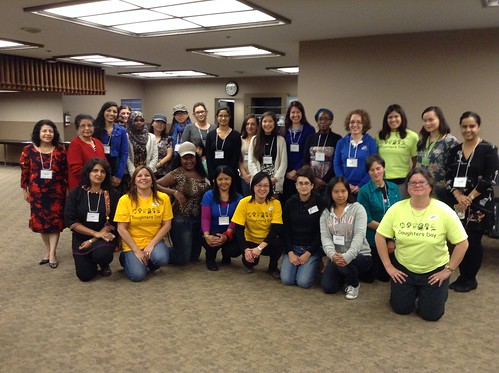
Introduction
About me:
This portion of the workshop was open to questions. Here are some of my comments in response to the excellent questions I was asked:
Tuesday, April 22, 2014
Earth Day Talk: Activism, Slacktivism, and Clicktivism
I am often asked to either sing or speak at events, but rarely am I asked to do both. This was precisely what I did at the Edmonton Earth Day Week Kickoff 2014 that took place on April 21 at the Alberta Avenue Community League. Organized by the local Green Party, I was asked to sing a couple of songs and also give a short talk discussing the differences between activism, slacktivism, and clicktivism. I have posted my notes here for others to learn whatever they would like to take away from such a discussion, as well as the actual video of my talk (and the song I chose to follow it up with).
Activism vs. "Slacktivism" vs. "Clicktivism"
A. Definitions
The Internet/modern technology has opened up new possibilities in activism.
1. Clicktivism: online surveys, petitions, forwarding Facebook statuses, posting links on Twitter
Does not require much effort and can create inflated sense of accomplishment
2. Slacktivism: Term started a few years ago when wearing the yellow "Livestrong" bracelets became popular
Wearing something with a message, possibly just because it is trendy. Che Guevara t-shirt joke (picture of him, underneath: "I don't even know who this is.")
All activists have t-shirts etc. with messages. Can be discussion starters.
B. Criticism
I don't like these terms.
Lateral violence: criticising each other's methods and intentions when we should be working together towards common goals.
We need to respect each others' contributions to making a better world.
I am into rallies and marches: some people think they are ineffective. But they can raise awareness of others who see them, and get into media.
We can't always judge the effectiveness of methods.
Can be barriers to taking part in certain activities: sitting at the computer and doing things online may be all someone can do.
C. Activism
I discovered activism online while looking for groups to connect with.
Activism = active.
Requires commitment, lifestyle changes, working towards systemic changes on underlying issues.
D. Bottom Line
Avoid lateral violence.
Support each others' efforts.
Get involved in issues that speak to you.
Wednesday, April 09, 2014
Goddess Activism: Workshop Notes
I was asked to give a talk about the connections between Goddess spirituality and activism at the Alberta Goddess Conference in the fall of 2013. Unfortunately, due to various logistical problems the conference did not happen. However, since I spent time researching and writing on this topic, which has opened up a world of interest in this particular spiritual viewpoint, I have decided to share my workshop notes here. As well, I would be available to give this workshop in Edmonton to interested groups.
Welcome (is
everyone okay with this being videoed?)
Go around and
introduce ourselves, and speak briefly as to why we’re here.
Introduce myself
- Freelance writer/editor/photographer involved with
community and independent media. I document the local activist scene through my
website Radical Citizen Media and am also an organizer with the Edmonton Coalition Against War & Racism, and a founder of the Daughters Day
initiative, which celebrates the lives and achievements of women and girls
while raising awareness of human rights abuses. I’m also a musician (a “protest
singer”) and in 2012 I received the Salvos Prelorentzos Peace Award from
Project Ploughshares, a peace organization.
- I come from a traditional Jewish home, spent a while involved with a group that is essentially an Evangelical church that uses Jewish forms of worship and symbols, and am now exploring earth-based religion and seeing some natural connections between it and the religion of my origin. But today, I am here to talk about activism and Goddess spirituality.
- I come from a traditional Jewish home, spent a while involved with a group that is essentially an Evangelical church that uses Jewish forms of worship and symbols, and am now exploring earth-based religion and seeing some natural connections between it and the religion of my origin. But today, I am here to talk about activism and Goddess spirituality.
About Activism
Part of spirituality is to celebrate our senses
Activism =
sense-itivity to the world around us
Activism and
spirituality are connected, regardless of which spirituality or religion one
follows, activism are the actions that back up or support our beliefs,
meditations, prayer, rituals. In Christianity, faith without works is dead, and
there are similar sayings in other religions too.
Activism
involves a cause we believe deeply in. We often think of it as a global or
large issue (foreign policy, peace, the environment,) but it can also be
something small and affecting our lives locally (getting a traffic light
installed in a busy intersection).
Activism and
Goddess spiritually most naturally and historically connects with feminism, and
the modern Goddess movement is linked with feminism through celebrating our
innate power as women. Alternately, feminism is a modern activist movement. But
Goddess activism is not just limited to causes affecting those who identify as women.
In the activist community, most people are known for favouring a specific
cause, so to be an activist you just have to find a cause that resonates with
you. Then, connect with others who share those values. Things have changed a
lot in this regard – I had to get online and really dig around, but it’s easier
now with social media like Facebook and Twitter being so prevalent.
Empowerment of
women is only one reason why Goddess or Earth-based spirituality in general is
attractive to a growing number of people. Because there is no dogma, no central
authority, no official leaders, and really no hard and set rules, Wicca and
neo-Paganism can attract left-learning, anti-authoritarian kinds of people like
anti-capitalists and anti-globalization activists.
Challenges
Being a Goddess
activist has challenges. Some of these challenges are the same for all
activists, but they can affect us as women in different ways. These include:
Lateral violence: (gossip, backstabbing
amongst other activists, rising from jealousy and other issues);
Sexism: (for example, men hold the
“leadership” positions but it’s actually the women doing all of the work. I
read a stat a while back that 90% of volunteer work in churches and non-profits
was done by women).
Activist burn out: we have lives apart
from activism, families, lovers, other interests, careers. Self care is
important. The personal is political: if we are a bunch of burned out, unhappy
people in our personal lives, we’re not going to be as effective as activists,
as most importantly, be physically and emotionally healthy as people. This
where our spirituality is important, as giving us a foundation and energy
release.
To discuss how
Goddess spirituality can be applied to activism, I am picking two major
activist themes that directly relate:
A. Environment
- In most writings about Goddess spirituality, Wicca, and
Paganism, nature is considered sacred. Just read Starhawk, or any other major
author that writes about this faith tradition.
- Goddess spirituality is part of Earth-based religion.
We are part of nature, we are guardians of nature, and we have to respect
nature.
B. Peace
- Just like nature is sacred, life is sacred. Cyclical:
We are also part of nature. Spiritually and physically – regardless of one’s
views of the afterlife, our physical bodies return to the earth one way or the
other.
- Our bodies are
sacred space – how we treat each other is essential to peace. Behaviours like
yelling and gossip are a form a personal violence. We will never be able to
stop violence on a broader scale if we don’t treat each other with respect.
- Threefold Law
of return: Every action has a threefold return. So, activism is something that
should be a regular part of our lives, because we’re sending out positivity and
good vibes with our actions.
- Activism does
not always have to involve big, grand actions. Words have power. Making
affirmations is important and can have a positive effect in changing the world.
C. Animal Rights
- Humans are
sacred, but no more sacred than anything else on Earth. Humans and animals are
equal. This is why Earth-based spiritual practitioners are often animal rights
activists and vegetarians/vegans.
Summary
Activism and
Earth-based Goddess spirituality are interconnected. Not every activist is a
Pagan or Wiccan, but a large proportion of Pagans and Wiccans are activists
because of the connections between the sacred and the earth and our bodies.
Questions/Comments?
Thursday, August 22, 2013
My Al Quds Speech
Here is the text of my speech delivered on August 2, 2013 at the Al Quds event in Edmonton.
I grew up in a fairly traditional Jewish home, where I often equated Judaism with Israel. Much later on as I began to explore issues concerning the Middle East, I realized that I had only been presented with one side of the story. I began to question why, if Israel is only defending itself from supposed enemy attacks, why the victims of Israeli aggression seemed to disproportionately be women and children. I began to question why I, as a Jewish woman, could get automatic citizenship to a country where I had never set foot, when people who have been living there for generations don't even have basic human rights. And, I began to question why questioning these sorts of things seemed to be such a touchy issues in the organized Jewish community. A little while after this, in an effort to reach out to like-minded people, I joined Independent Jewish Voices. Independent Jewish Voices is a grassroots organization of concerned Canadian Jewish citizens who are against the unjust, illegal, and immoral occupation of the Palestinian territories. We come from diverse backgrounds, occupations, and affiliations but have in common a strong commitment to social justice and universal human rights. We come together in the belief that the broad spectrum of opinion amongst the Jewish population of this country is not reflected by those institutions which claim authority to represent the Jewish community as a whole. We further believe that individuals and groups within all communities should feel free to express their views on any issue of public concern without incurring accusations of disloyalty. Independent Jewish Voices is also the first national Jewish organization in the world which formally adopted BDS (Boycott Divestment Sanctions) in 2009. My practise of Judaism includes values such as compassion, social justice, and Tikkun Olam, which is the Jewish concept of healing or repairing the world. The occupation of the Palestinian people violates these principles. Ironically, like many other Jewish people who are also against the occupation, I have been called self-hating and anti-Semitic. I have learned that, besides being absurd (someone who self-identifies as being Jewish is hardly “self-hating”), these are tactics to try to discredit dissenting viewpoints and to try to shut the conversation down. In the Jewish community, there is a lot of misinformation about the connection between Judaism and Zionism. The bottom line is that the spiritual and cultural practise of Judaism and the political philosophy of Zionism are not intrinsically connected. Historically, Zionism was opposed by almost all organized branches of Judaism. Today, there are some very strong Jewish voices from within Israel who have remained fierce critics of Israeli colonial settlement policy in the Occupied Territories for many years. I try to communicate to other Jewish people that they should examine the situation in the Middle East from an objective point of view. They should be concerned that human rights violations and murder are being committed in our name. They should be concerned that, despite our culture of intellectualism and open debate, that when it comes to this issue, dissent is discouraged. It is my sincere hope that a new generation of Jewish people is coming of age that is more open to questioning these important issues and not blindly following the Jewish establishment.
I grew up in a fairly traditional Jewish home, where I often equated Judaism with Israel. Much later on as I began to explore issues concerning the Middle East, I realized that I had only been presented with one side of the story. I began to question why, if Israel is only defending itself from supposed enemy attacks, why the victims of Israeli aggression seemed to disproportionately be women and children. I began to question why I, as a Jewish woman, could get automatic citizenship to a country where I had never set foot, when people who have been living there for generations don't even have basic human rights. And, I began to question why questioning these sorts of things seemed to be such a touchy issues in the organized Jewish community. A little while after this, in an effort to reach out to like-minded people, I joined Independent Jewish Voices. Independent Jewish Voices is a grassroots organization of concerned Canadian Jewish citizens who are against the unjust, illegal, and immoral occupation of the Palestinian territories. We come from diverse backgrounds, occupations, and affiliations but have in common a strong commitment to social justice and universal human rights. We come together in the belief that the broad spectrum of opinion amongst the Jewish population of this country is not reflected by those institutions which claim authority to represent the Jewish community as a whole. We further believe that individuals and groups within all communities should feel free to express their views on any issue of public concern without incurring accusations of disloyalty. Independent Jewish Voices is also the first national Jewish organization in the world which formally adopted BDS (Boycott Divestment Sanctions) in 2009. My practise of Judaism includes values such as compassion, social justice, and Tikkun Olam, which is the Jewish concept of healing or repairing the world. The occupation of the Palestinian people violates these principles. Ironically, like many other Jewish people who are also against the occupation, I have been called self-hating and anti-Semitic. I have learned that, besides being absurd (someone who self-identifies as being Jewish is hardly “self-hating”), these are tactics to try to discredit dissenting viewpoints and to try to shut the conversation down. In the Jewish community, there is a lot of misinformation about the connection between Judaism and Zionism. The bottom line is that the spiritual and cultural practise of Judaism and the political philosophy of Zionism are not intrinsically connected. Historically, Zionism was opposed by almost all organized branches of Judaism. Today, there are some very strong Jewish voices from within Israel who have remained fierce critics of Israeli colonial settlement policy in the Occupied Territories for many years. I try to communicate to other Jewish people that they should examine the situation in the Middle East from an objective point of view. They should be concerned that human rights violations and murder are being committed in our name. They should be concerned that, despite our culture of intellectualism and open debate, that when it comes to this issue, dissent is discouraged. It is my sincere hope that a new generation of Jewish people is coming of age that is more open to questioning these important issues and not blindly following the Jewish establishment.
Subscribe to:
Posts (Atom)