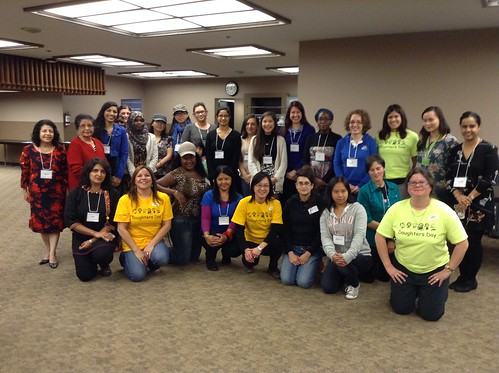
On November 29 and 30, Studio 96 became home for about 30 young people, mostly in their late teens and early 20s, who took part in a 24-hour “Thinkathon.”
“Our Digital Future, C'est Ici” was organized by the Goethe-Institut Montreal, as well as the Goethe-Institut Toronto, Edmonton's NextGen, European Union in Canada, and the CJD NDG, a non-profit organization in Montreal that helps young people enter the job market.
The Edmonton event was the second in a series of Thinkathons in six Canadian and six European cities between now and the end of 2020.
The project offers young citizens (18-30) an open, inclusive platform for a debate on our digital futures. During the 24 hours, participants co-created videos and social media campaigns, as well as recommendations, for Canadian and European politicians. The work took place both on-site and online, connecting with a Thinkathon happening at the same time in Milan, Italy.
The first Thinkathon took place in October in Montreal and Brussels, Belgium on the topic of Digital Citizenship 4.0.
I was especially excited to be asked to be one of the guest expert speakers at the Edmonton event. I was asked to speak because of my work in community and digital media, as well as community organizing. My topics were online hate, hate groups, and bullying in the digital age, particularly how to deal with it when encountered online and how to protect themselves (and each other) from such behaviours. I was also asked lots of questions about the current state of the media, and how the digital age has changed how we get our information and how we interact with social media and the Internet.
After introducing myself and explaining my work (focusing in particular on documenting social movements at
RadicalCitizenMedia.com), I gave a very general overview on online hate and bullying. Some of my major talking points included:
The digital age can give anyone a public platform, which can be good - it means people who are marginalized but have access to electronics can have a voice - but there is a dark side.
People can feel emboldened behind a keyboard, and can even be anonymous, and say things they would never say in person.
Online media can also make recruiting people for hate groups easier, because people who are lonely, disenfranchised, vulnerable can be easier to reach.
Arguing with haters doesn't work. It just amplifies whatever was posted.
Block, delete, report, repeat. If reported enough, person/group may get banned from the service. They may come back with a different name, so be vigilant and keep reporting.
Same for bullying: report behaviour, and support the person being bullied. Send them public and private words of support.
Protect yourself: keep social media locked down to friends only, be particular about who you accept to friend/follow you, use a false name, don't use a photo of yourself as a profile picture.
Doxxing = posting a person's photo and personal information online with the intent of causing harassment. If you are doxxed report it to the online service, to authorities. Keep a record of all harassing calls, emails, posts.
The questions and comments that followed were excellent. Here is a summary of the outcomes of those questions and comments:
While "block, delete, report, repeat" might seem like a band-aid solution, it's the first step. The goal is to get the groups/individuals off the Internet. This has been achieved through continuous reporting, but also posting about the people/group and their behaviour on public platforms, including screenshots/quotes.
Emotions cannot be banned. But if someone is posting harmful, inappropriate things, they have to be stopped. It would be great to channel that energy into something positive, but that usually comes from a person's work on themself and the intervention of the people around them. They also may not see their actions/words/ideology as negative. They think they are standing up for their country, their culture, or whatever. It's very difficult to have a rational discussion with someone of that mindset.
There are no laws specifically against doxxing (that I am aware of), but there are laws against criminal harassment. Document everything.
Social media has changed the way people do community organizing and activism, in terms of organizing events but also how they participate, to capture very visual or vocal multimedia posts to use on social media.
Social media has grown in importance in terms of allowing people to become citizen journalists, especially now when traditional media is dwindling.
It's important to be positive, even when social media is very sad and dark. Post about people in your community doing things to make the world a better place. Don't engage with the negativity if it is hate speech or trolls - work to get rid of it as described above, and add posts that are more positive in nature to your social media.
What should be done about "cancel culture" and/or "call-out culture"? If a person has made a mistake or done something inappropriate and you have access to them, talk to them first. Calling out as a first step is generally reserved for people to whom one doesn't have access, such as celebrities being called out as part of the #MeToo movement. Every situation is different and you need to use your own judgement, but in general, calling out should be a last resort.
How has documenting local activism changed since I began in 2005? When I started, I was one of the few doing it, but now since so many people have smartphones, lots of people are taking photos and shooting video and posting on social media.
More information about the Thinkathons is here.